Introduction
Few icons in entertainment history command instant recognition like Godzilla (Gojira). Born in 1954 from the nuclear anxieties of post-war Japan, the towering radioactive leviathan has stomped across more than seven decades of cinema, comic books, video games, and global pop culture—evolving from a terrifying symbol of atomic destruction into Earth’s ultimate Alpha Titan.
From Takashi Yamazaki’s Godzilla Minus Zero roaring past $120 million worldwide on a reported $15 million budget to Legendary’s MonsterVerse expanding into cosmic territory with Godzilla x Kong: Supernova, the King of the Monsters continues to conquer audiences around the globe. Whether you are a lifelong kaiju die-hard who grew up on Saturday afternoon monster marathons or a newer fan captivated by his modern big-screen resurgence, here are 20 amazing Godzilla facts covering his creation history, behind-the-scenes secrets, atomic powers, and wildest pop culture milestones! (Want the full breakdown of his cinematic eras, forms, and rivalries first? Check out our Godzilla Comprehensive Character Summary!)
Creation & Publication History
- First Appearance: Gojira (released in Japan on November 3, 1954; adapted in North America as Godzilla, King of the Monsters! in 1956)
- Creators: Tomoyuki Tanaka (producer), Ishirō Honda (director), Eiji Tsuburaya (special effects director), and Akira Ifukube (composer)
- Primary Continuities: Toho’s Shōwa (1954–1975), Heisei (1984–1995), Millennium (1999–2004), and Reiwa (2016–Present) eras; Legendary Pictures’ MonsterVerse (2014–Present)
Core Attributes & Profile
- Japanese Name: Gojira (a portmanteau of gorira [gorilla] and kujira [whale])
- Height: Ranges from 50 meters (164 feet) in 1954 up to 120 meters (393 feet) in Legendary’s MonsterVerse
- Weight: 20,000 metric tons (1954) to nearly 100,000+ metric tons (MonsterVerse)
- Signature Abilities: Atomic Breath (Hōsha Nessen), Omnidirectional Nuclear Pulse, Accelerated Regeneration (Organizer G-1), Amphibious Mastery, and Alpha Titan Sensory Perception
Key Relationships & Rivalries
- Closest Allies: Mothra (Queen of the Monsters), Kong (fellow Alpha Titan), Anguirus, and Rodan
- Greatest Rivals: King Ghidorah (Monster Zero), Mechagodzilla, Destoroyah, SpaceGodzilla, and the MUTOs
- Notable Human Figures: Dr. Daisuke Serizawa (1954), Dr. Ishiro Serizawa (MonsterVerse), and Kōichi Shikishima (Godzilla Minus One & Minus Zero)
Biography & Cultural Evolution
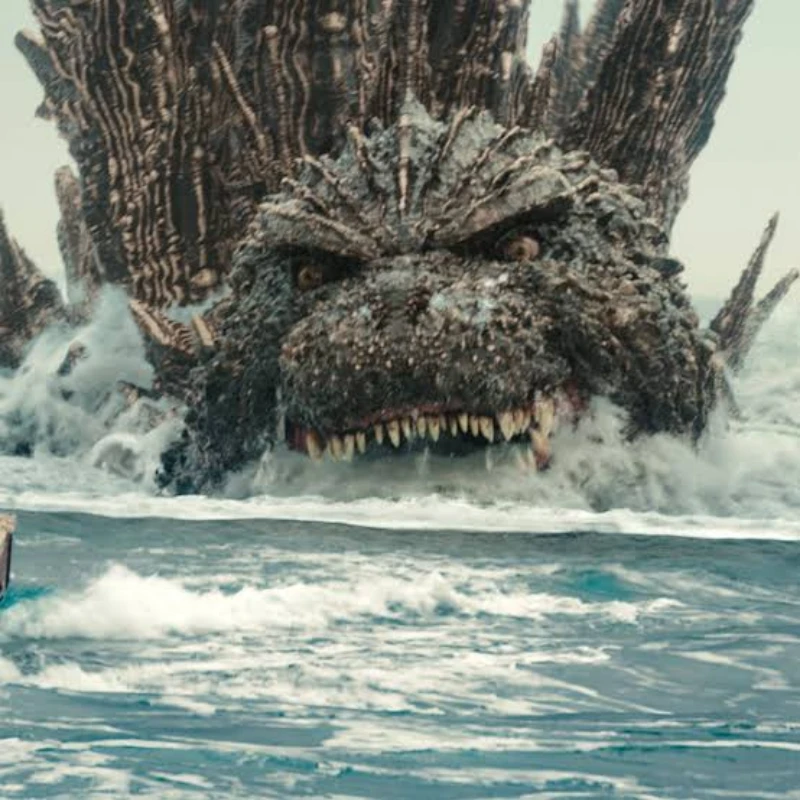
Conceived in March 1954 after the Japanese fishing vessel Daigo Fukuryū Maru (Lucky Dragon No. 5) was contaminated by fallout from the Castle Bravo hydrogen bomb test at Bikini Atoll, Gojira was created by Toho producer Tomoyuki Tanaka as a solemn warning against nuclear weapons. Over the ensuing seven decades, Godzilla transformed across five major film eras—shifting from grim post-war allegory to heroic 1960s–70s defender, tragic Heisei anti-hero, primordial MonsterVerse guardian, and Oscar-winning modern icon.
Film Reception & Modern Milestones
From winning the franchise’s first Academy Award for Best Visual Effects with Godzilla Minus One (2023) to Godzilla Minus Zero setting records for the highest-grossing live-action opening day in Japanese cinema and the biggest North American opening weekend ever for a foreign-language live-action film ($30.6 million), Godzilla remains the longest-running continuously active film franchise in history.
20 Amazing Godzilla Facts
1. His Name Combines “Gorilla” and “Whale”
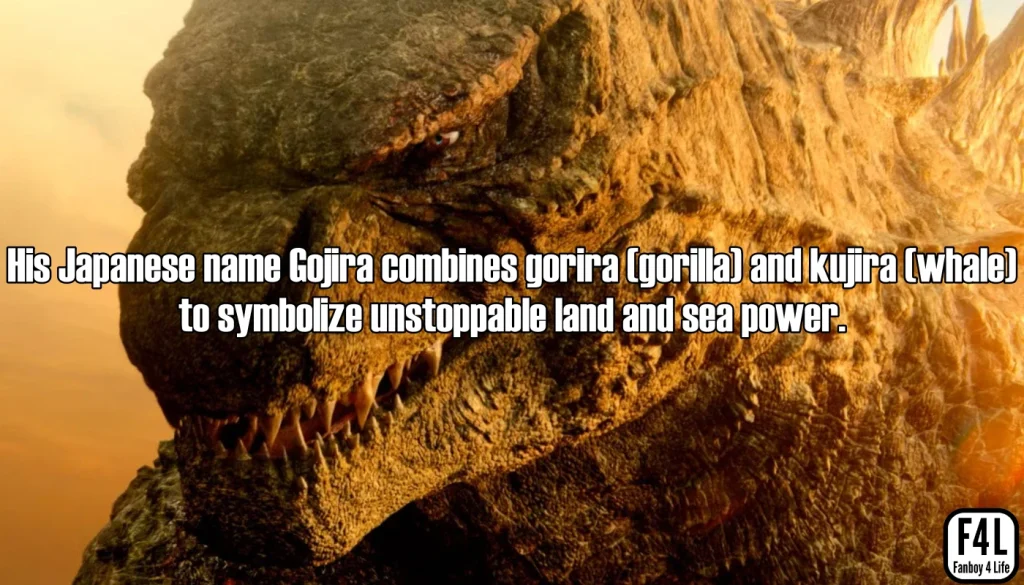
Godzilla’s original Japanese name, Gojira, was created by blending two Japanese words: gorira (gorilla) and kujira (whale). During early pre-production at Toho Studios in 1954, producers wanted a title that immediately communicated both brute terrestrial power and immense oceanic scale. By fusing the fierce strength of a giant ape with the colossal underwater mass of a whale, Gojira was born—later transliterated into English as Godzilla when Toho prepared the film for international distribution.
2. He Was Inspired by a Real-Life Nuclear Tragedy
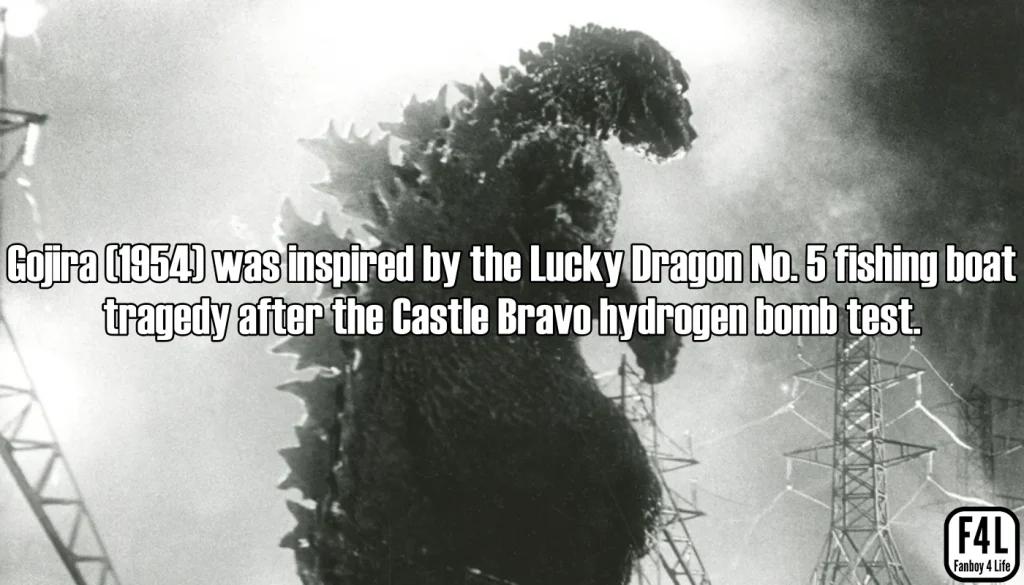
Although Godzilla has fought alien dragons and robotic doppelgängers over the decades, his origin is rooted in somber real-world history. In March 1954, a Japanese tuna fishing boat called the Daigo Fukuryū Maru (Lucky Dragon No. 5) drifted near Bikini Atoll in the Marshall Islands when the United States detonated its massive Castle Bravo thermonuclear bomb. The entire crew suffered severe radiation sickness—igniting intense anti-nuclear sentiment across Japan less than nine years after Hiroshima and Nagasaki. Flying home from Indonesia, producer Tomoyuki Tanaka looked down at the Pacific Ocean and envisioned a prehistoric sea monster awakened and mutated by hydrogen bomb tests.
3. Originally, Godzilla Was Planned to Be a Giant Octopus
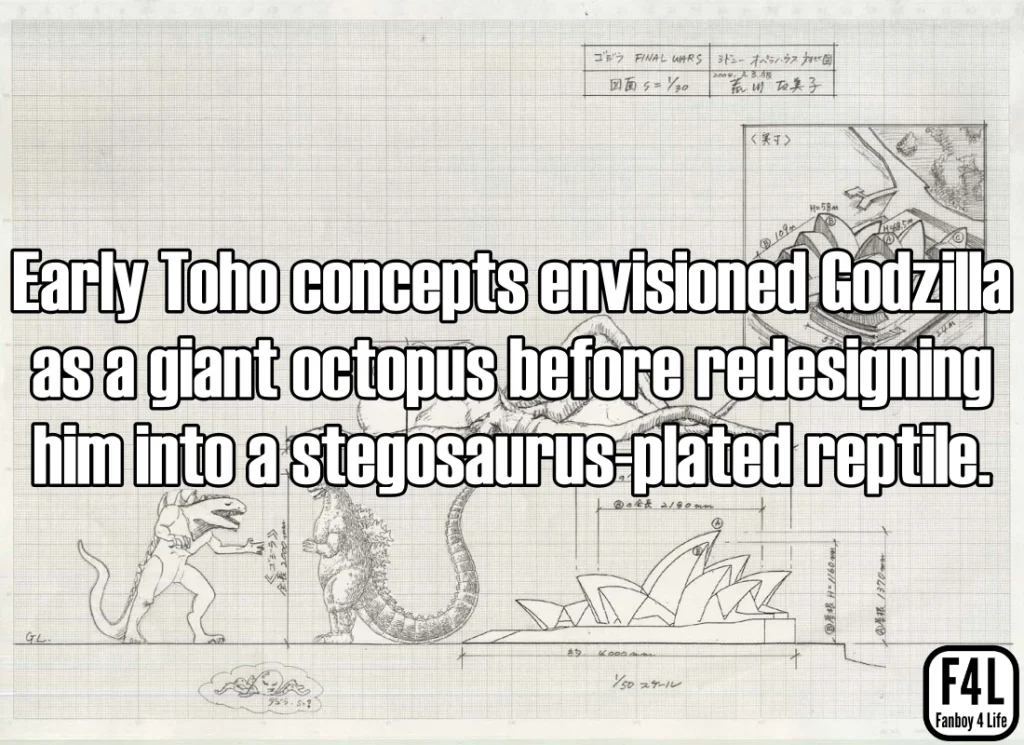
Before Toho settled on a towering prehistoric reptile, early concept meetings imagined Godzilla as a colossal octopus rising out of Tokyo Bay to crush ships and coastal towns. Inspired by Ray Harryhausen’s The Beast from 20,000 Fathoms (1953) and traditional sea-monster folklore, the octopus idea was ultimately scrapped because tentacles proved nearly impossible to animate convincingly with 1950s miniature effects. Art director Akira Watanabe and special effects pioneer Eiji Tsuburaya pivoted to a dinosaur-like titan combining traits of a Tyrannosaurus rex, an Iguanodon, and a Stegosaurus.
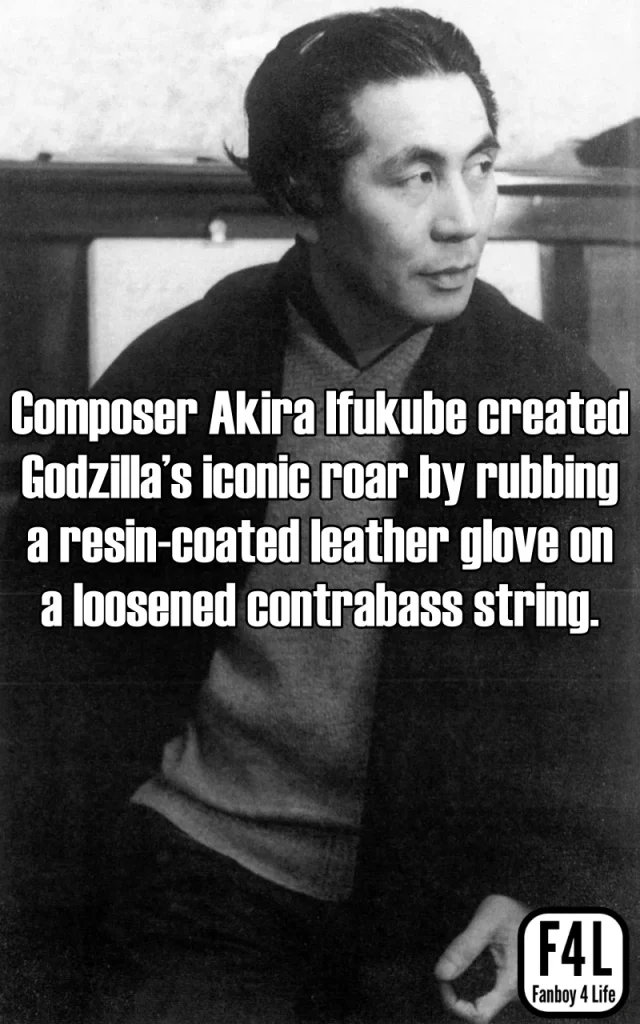
4. His Iconic Roar Was Made with a Contrabass and a Leather Glove
When composer Akira Ifukube began designing Godzilla’s voice in 1954, he quickly realized that recorded lion, tiger, and alligator roars sounded far too ordinary for a 164-foot nuclear monster. Instead, Ifukube visited a music studio, loosened the thick strings of a contrabass, and dragged a pine-tar-resin-coated leather glove across them. By slowing down the resulting metallic screech and adding reverb, he created one of the most recognizable sound effects in motion picture history—a roar that has echoed across theaters for more than seventy years.
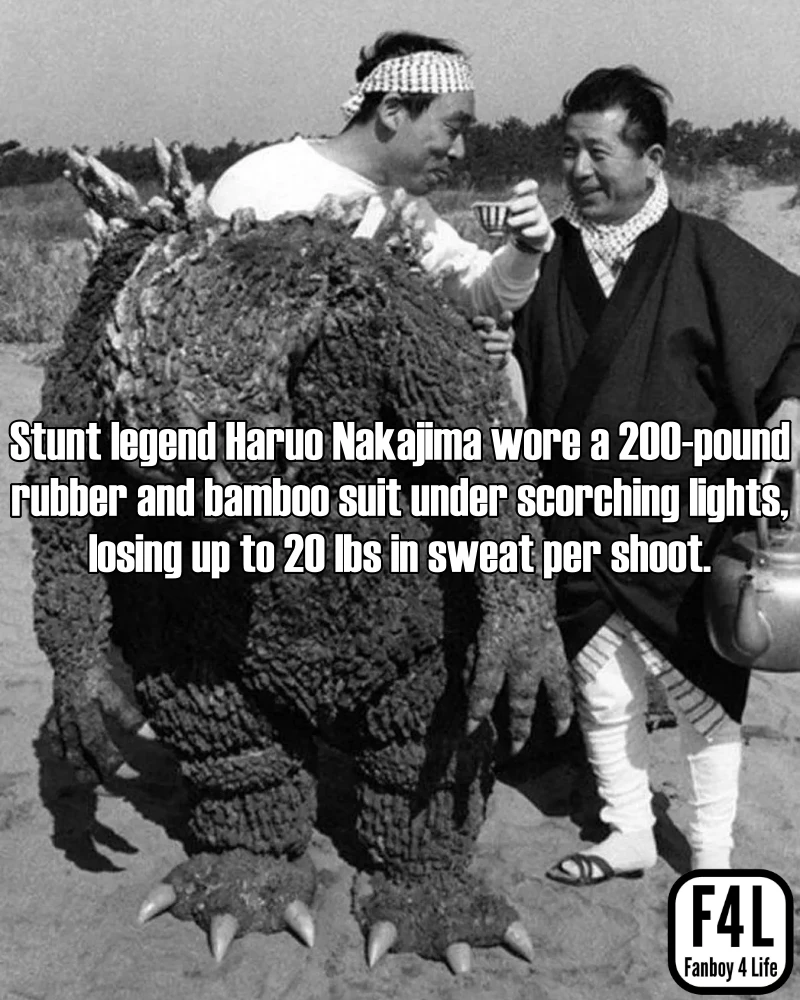
5. The Original 1954 Suit Weighed Over 200 Pounds and Nearly Knocked Out Its Actor
Because Hollywood-style stop-motion animation was too expensive and time-consuming for Toho’s 1954 release schedule, Eiji Tsuburaya invented “suitmation”—placing a stunt performer inside a rubber monster costume to stomp across intricate miniature cityscapes. The first prototype suit was constructed from heavy ready-mixed concrete, bamboo, and wire, weighing so much that stunt actor Haruo Nakajima could barely lift his legs. Even after the team rebuilt it using lighter liquid latex, the suit still weighed over 200 pounds (90+ kg), lacked ventilation, and trapped scorching studio heat—causing Nakajima to lose up to 10–20 pounds in sweat per shoot and even pass out from oxygen deprivation.
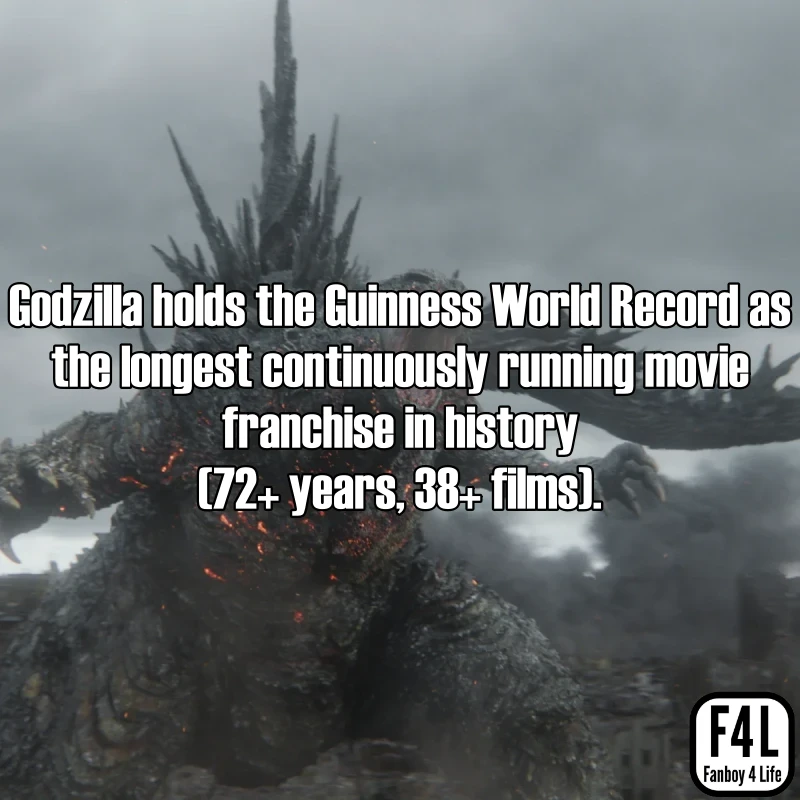
6. Godzilla Holds the Guinness World Record as the Longest-Running Film Franchise
Officially certified by Guinness World Records, Godzilla holds the title for the longest continuously running film franchise in history. Since Gojira first premiered on November 3, 1954, the series has spanned more than 72 years and 38+ feature films across Toho’s Japanese productions and Legendary’s Hollywood MonsterVerse—outlasting James Bond (which debuted in 1962) by eight full years.
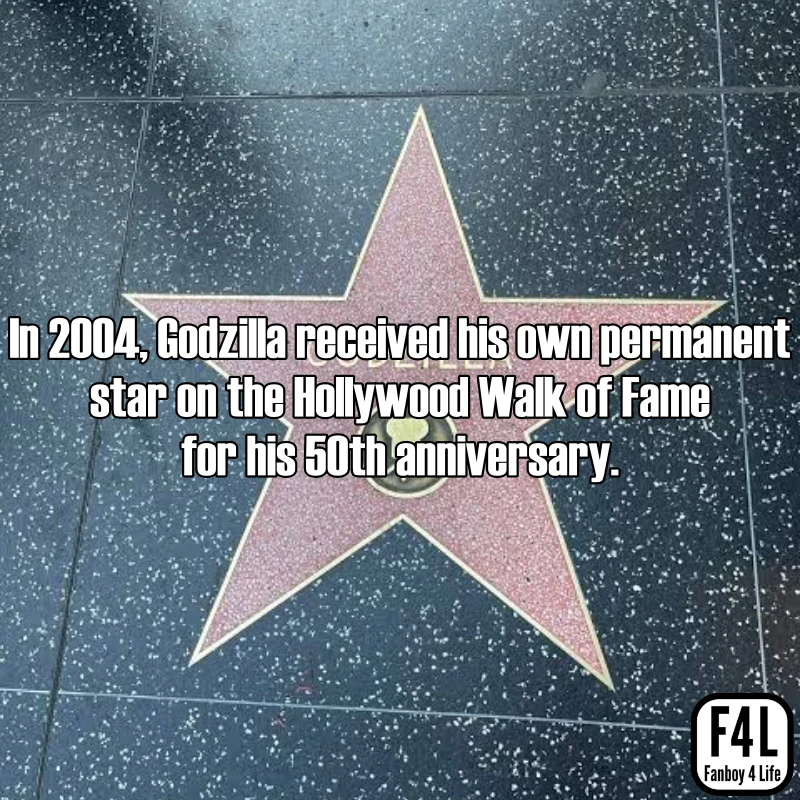
7. He Has His Own Star on the Hollywood Walk of Fame
In November 2004, to celebrate his 50th anniversary and the premiere of Godzilla: Final Wars, Godzilla joined an ultra-exclusive club of fictional icons by receiving a permanent brass star on the Hollywood Walk of Fame at 6925 Hollywood Boulevard. Alongside characters like Mickey Mouse, Bugs Bunny, and Donald Duck, the King of the Monsters stands cemented on one of entertainment’s most famous sidewalks.
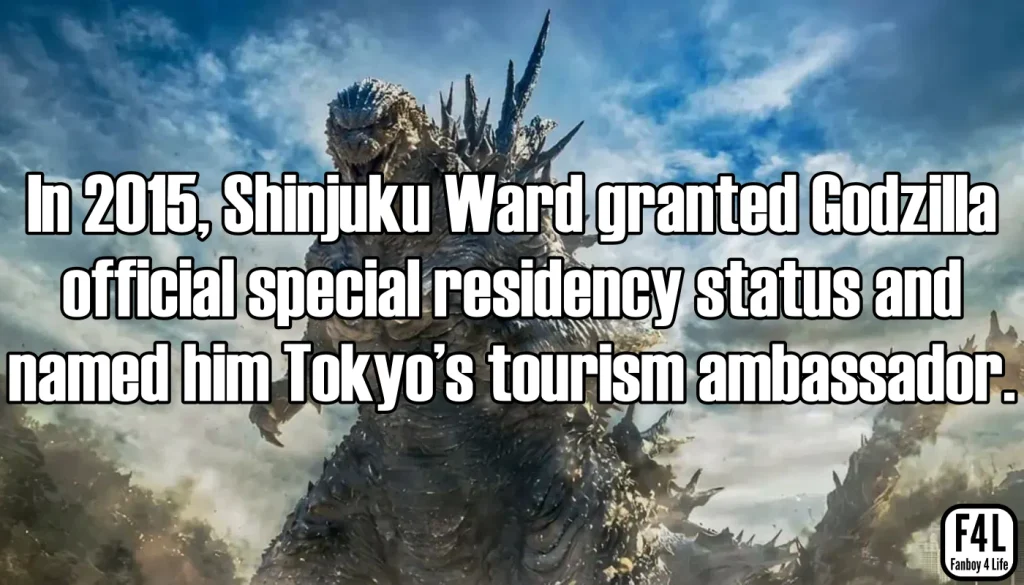
8. Godzilla Is an Official Resident and Tourism Ambassador of Tokyo
In April 2015, Tokyo’s bustling Shinjuku Ward took kaiju pride to the next level by granting Godzilla official special residency status—complete with a printed, government-stamped residency certificate (jūminhyō) listing his address at Shinjuku Kabukicho and his birthdate as April 9, 1954 (the day filming began on the original movie). At the same time, Shinjuku appointed Godzilla its official tourism ambassador, unveiling a life-sized, roaring Godzilla head peering down over the skyline from the eighth-floor terrace of the Shinjuku Toho Building.
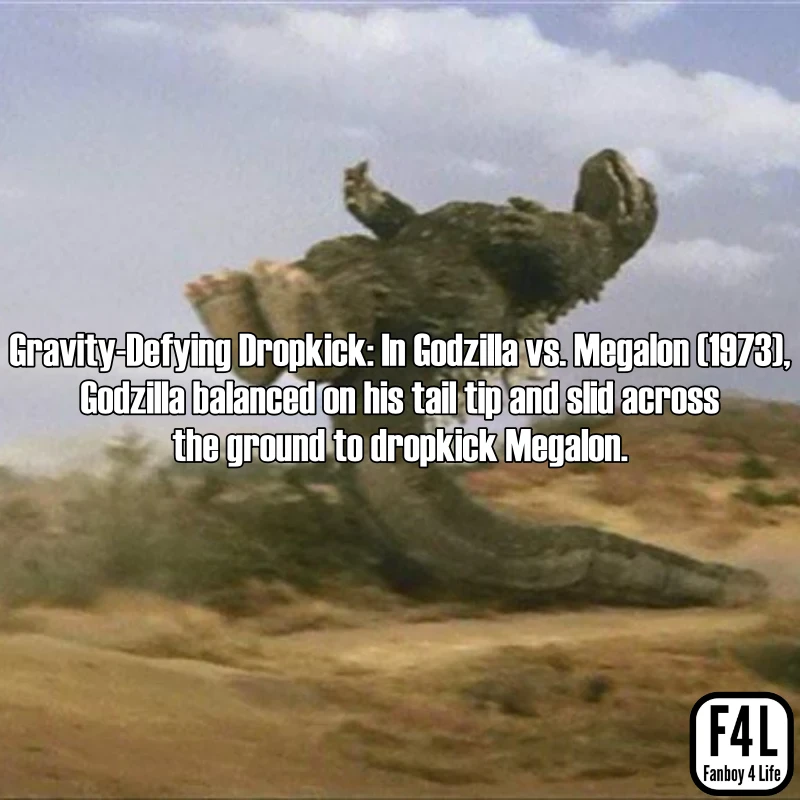
9. He Once Defied Gravity with a Flying Atomic Dropkick
While 1954’s Gojira and 2023’s Godzilla Minus One are celebrated for their serious dramatic weight, the 1960s and 1970s Shōwa era embraced pure Saturday-matinee madness. Nowhere is that more legendary than in 1973’s Godzilla vs. Megalon, when Godzilla leaned all the way back onto the tip of his tail, slid horizontally across dozens of yards of open terrain in complete defiance of gravity, and slammed both feet squarely into Megalon’s chest while robot ally Jet Jaguar held the villain in place.
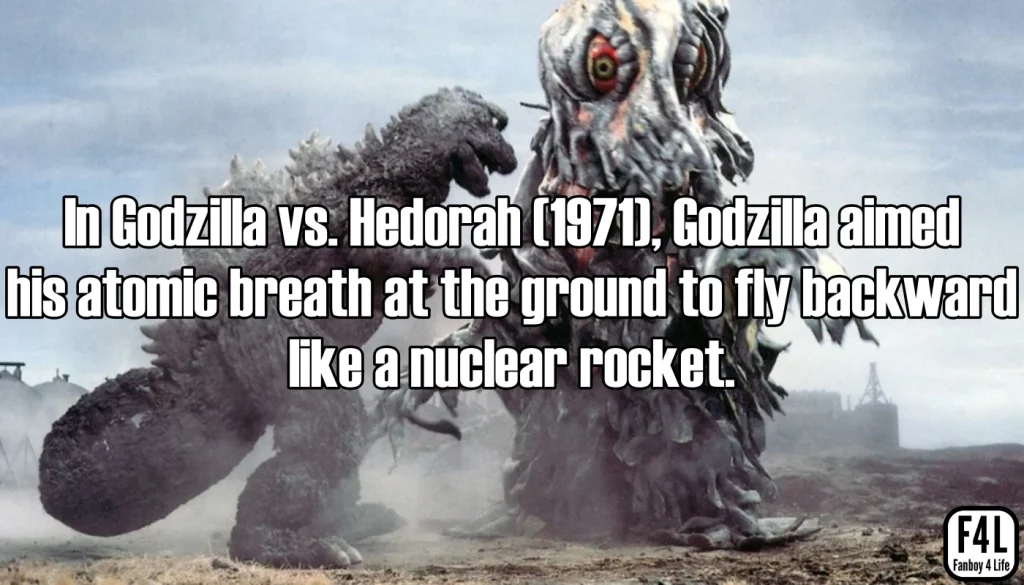
10. He Even Flew Backward Using His Atomic Breath
Two years before his famous tail-slide dropkick, Shōwa Godzilla pulled off an equally unforgettable physics-defying stunt in 1971’s Godzilla vs. Hedorah (Godzilla vs. the Smog Monster). When the toxic alien Hedorah took to the skies to escape battle, Godzilla curled his tail between his legs, aimed his atomic breath straight down at the ground, and blasted off backward through the air like a nuclear-powered rocket ship—chasing Hedorah mid-flight before tackling him back to Earth.
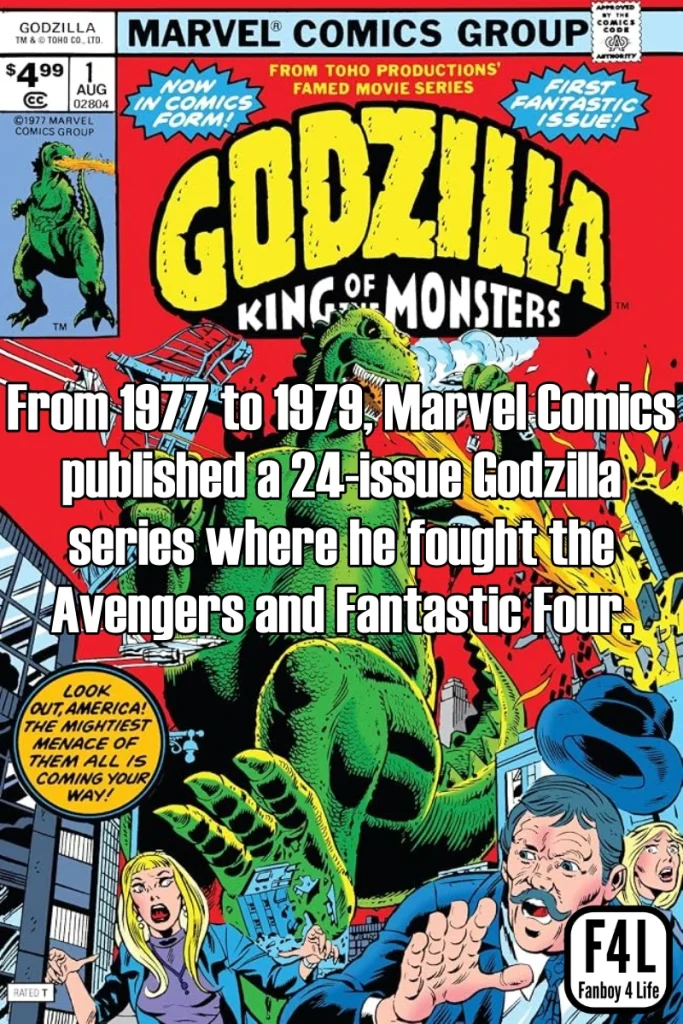
11. Marvel Comics Published a 24-Issue Godzilla Series Set in the Marvel Universe
Long before modern comic crossovers like Justice League vs. Godzilla vs. Kong, Marvel Comics officially licensed Godzilla for a 24-issue canon series running from 1977 to 1979. Written by Doug Moench and drawn by Herb Trimpe, Godzilla, King of the Monsters dropped the nuclear titan directly into the mainstream Earth-616 Marvel Universe—where he squared off against S.H.I.E.L.D.’s Helicarrier, Dum Dum Dugan, the Champions, the Fantastic Four, and even traded blows with Thor and the Avengers in the middle of New York City.
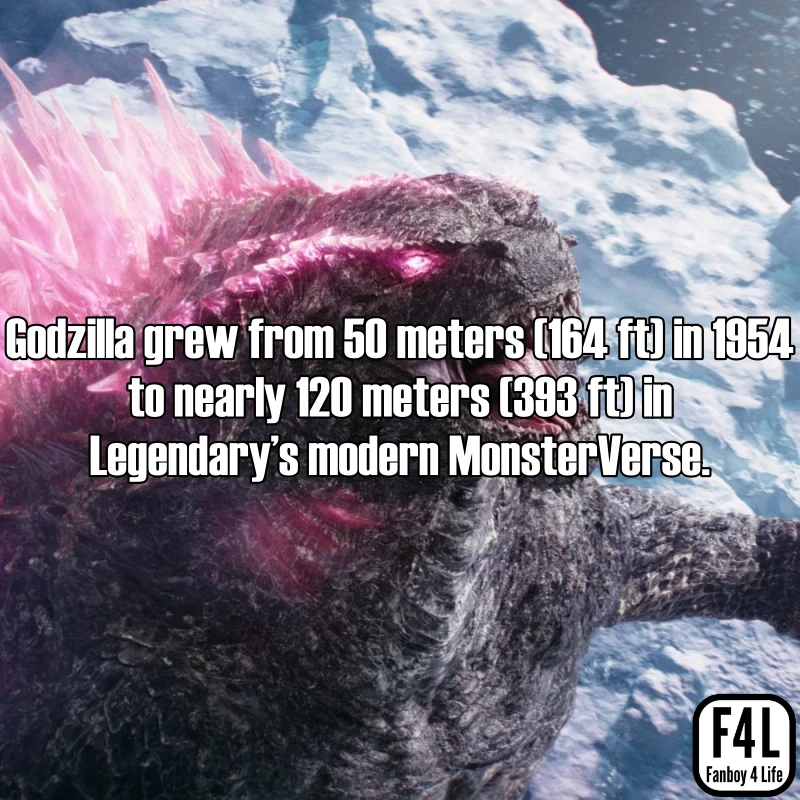
12. He Has More Than Doubled in Height Since 1954
When Godzilla first attacked Tokyo in 1954, he stood 50 meters (164 feet) tall—carefully chosen by Toho’s effects team so he would tower just high enough to peer ominously over the rooftops of 1950s Tokyo buildings, such as the famous Wako department store in Ginza. As real-world skyscrapers grew taller over the decades, filmmakers scaled Godzilla up to match: rising to 80–100 meters in the Heisei era, 118.5 meters in Shin Godzilla (2016), and nearly 120 meters (393 feet) in Legendary’s modern MonsterVerse.
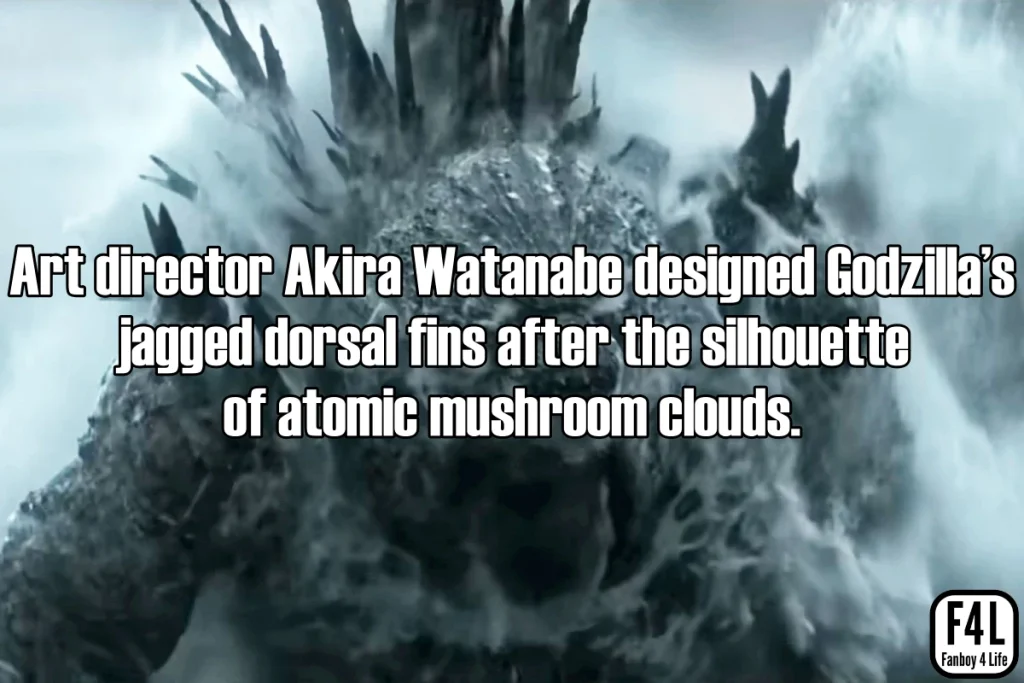
13. His Dorsal Plates Were Inspired by Nuclear Mushroom Clouds
Every detail of Godzilla’s physical silhouette was engineered to reinforce his anti-nuclear message. Art director Akira Watanabe modeled Godzilla’s rugged, charcoal-gray hide after the keloid scars suffered by atomic bomb survivors, while shaping his iconic, jagged triple row of maple-leaf dorsal fins directly after the billowing silhouette of nuclear mushroom clouds—ensuring that every time Godzilla surfaced from the ocean, audiences saw a walking reminder of atomic devastation.
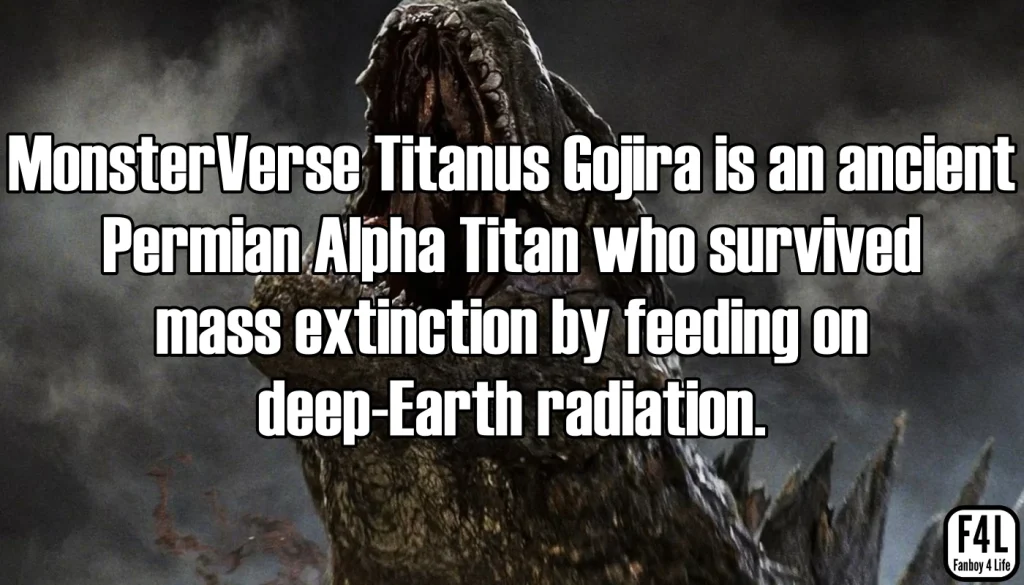
14. In MonsterVerse Lore, Godzilla Is Over 250 Million Years Old
While Toho’s classic incarnations were prehistoric reptiles mutated by 20th-century nuclear weapons, Legendary’s MonsterVerse reimagined Godzilla (Titanus Gojira) as an ancient primordial guardian born during the Permian Period over 250 million years ago. Surviving the Great Permian Mass Extinction by retreating deep into the ocean depths to feed on Earth’s natural geothermal radiation, MonsterVerse Godzilla is essentially nature’s apex immune system—awakening whenever rival Alpha Titans threaten the planet’s ecological balance.
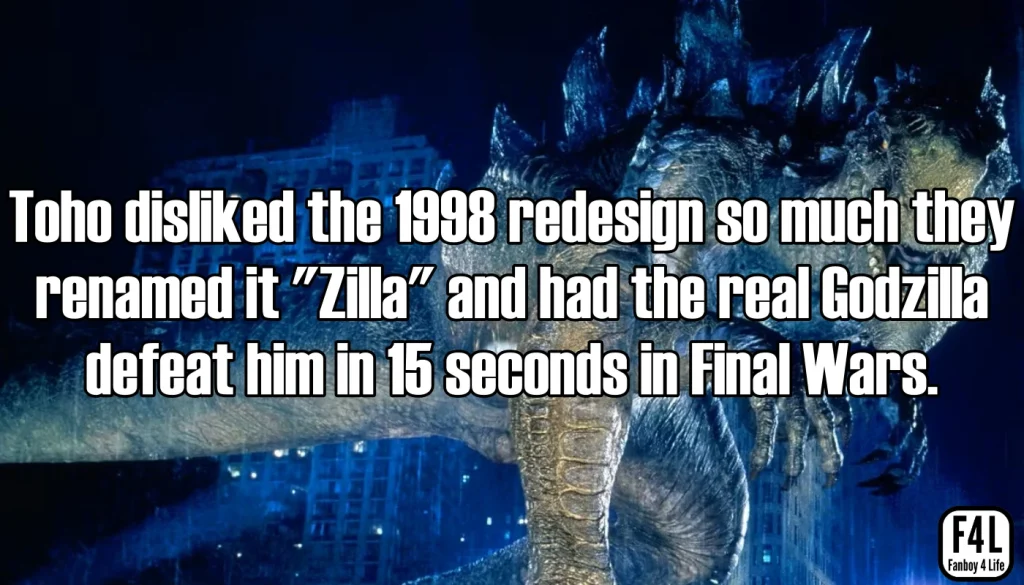
15. He Once Had a Legal Dispute Over His 1998 Hollywood Redesign
When TriStar Pictures released Roland Emmerich’s big-budget 1998 Hollywood Godzilla, fans and Toho executives alike were stunned by the radical departure: a sleek, iguana-like creature that lacked atomic breath, fled from military helicopters, and died after getting tangled in suspension cables on the Brooklyn Bridge. Toho disliked the redesign so strongly that they officially trademarked the 1998 monster as a separate kaiju named “Zilla”—and in 2004’s Godzilla: Final Wars, the real Japanese Godzilla obliterated Zilla in Sydney, Australia in roughly 15 seconds while Sum 41’s “We’re All to Blame” blasted on the soundtrack.
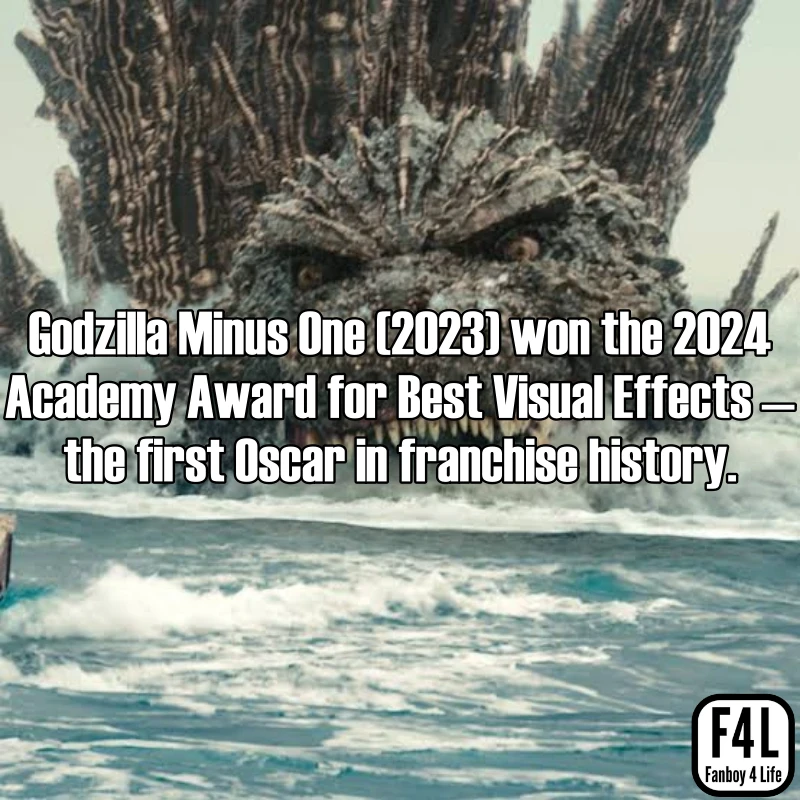
16. Godzilla Minus One Won the Franchise’s First Academy Award
Nearly seventy years after Gojira first roared onto theater screens, writer-director Takashi Yamazaki’s Godzilla Minus One (2023) made Hollywood history by winning the 2024 Academy Award for Best Visual Effects. Produced on a reported budget under $15 million with a core VFX team of just 35 artists at Shirogumi, Minus One became the first Godzilla film ever nominated for—and to win—an Oscar, as well as the first Japanese film in history to claim the Best Visual Effects statuette.
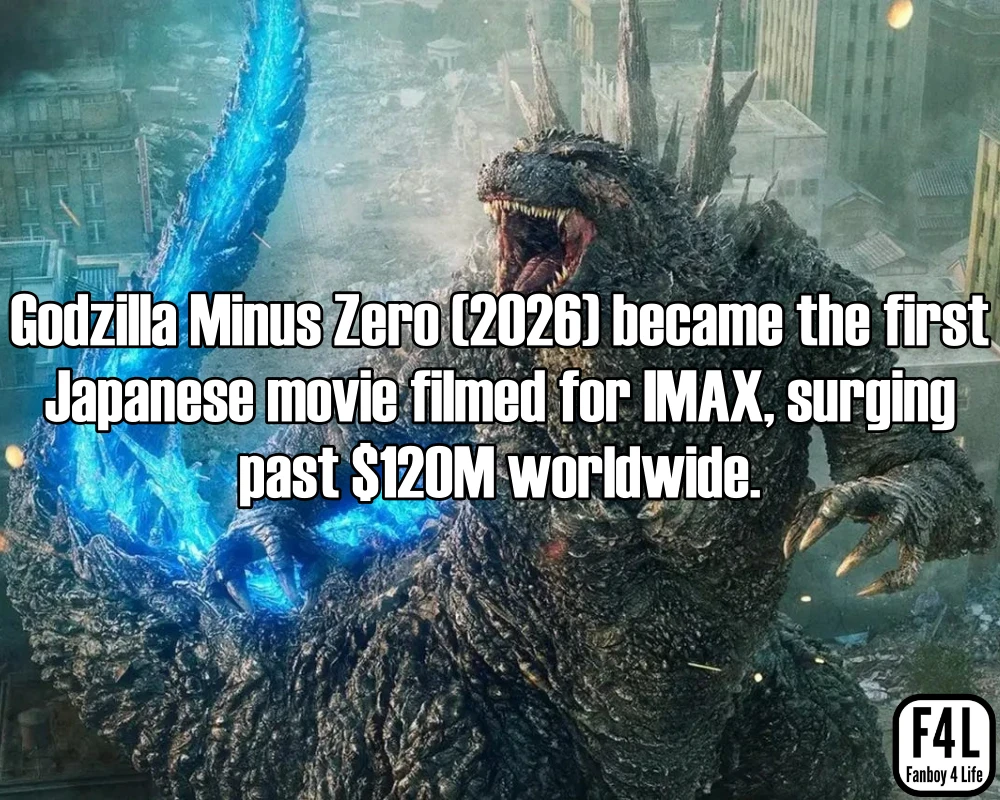
17. Godzilla Minus Zero Became the First Japanese Film Filmed for IMAX
Following the massive global triumph of Minus One, Takashi Yamazaki returned with a direct sequel, Godzilla Minus Zero (Gojira -0.0), in November 2026. Making cinema history as the first Japanese live-action movie ever filmed specifically for IMAX, the R-rated post-war thriller shattered records for the highest-grossing live-action opening day in Japan, debuted at #1 at the North American box office with $30.6 million, and surged past $120 million worldwide against a reported $15 million budget.
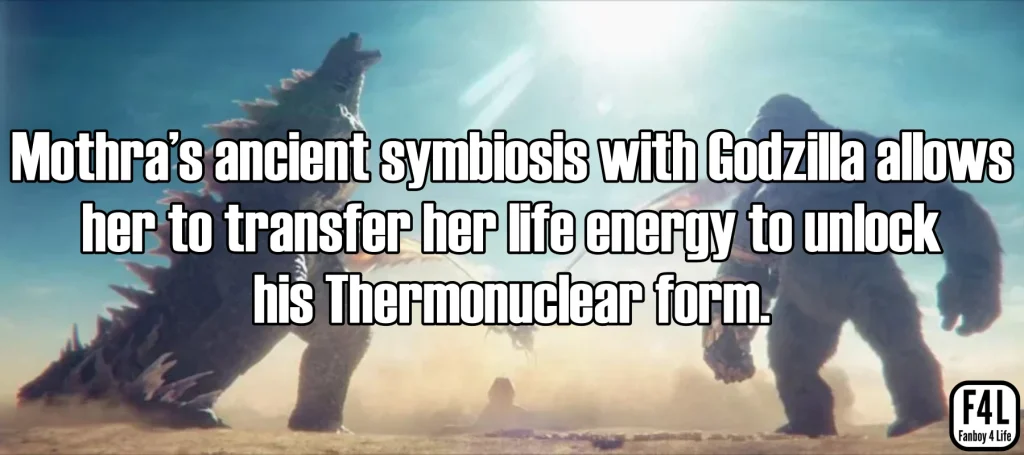
Across both Toho’s classic continuity and Legendary’s MonsterVerse, Mothra (Titanus Mosura) shares a deep evolutionary symbiosis with Godzilla. Known as the benevolent “Queen of the Monsters,” Mothra communicates with Godzilla via long-range bioluminescent sonar and repeatedly sacrifices herself in battle to protect him—most famously in Godzilla: King of the Monsters (2019), when her dissolving scales transfer pure life energy into Godzilla, unlocking his unstoppable Thermonuclear Burning state to vaporize King Ghidorah.
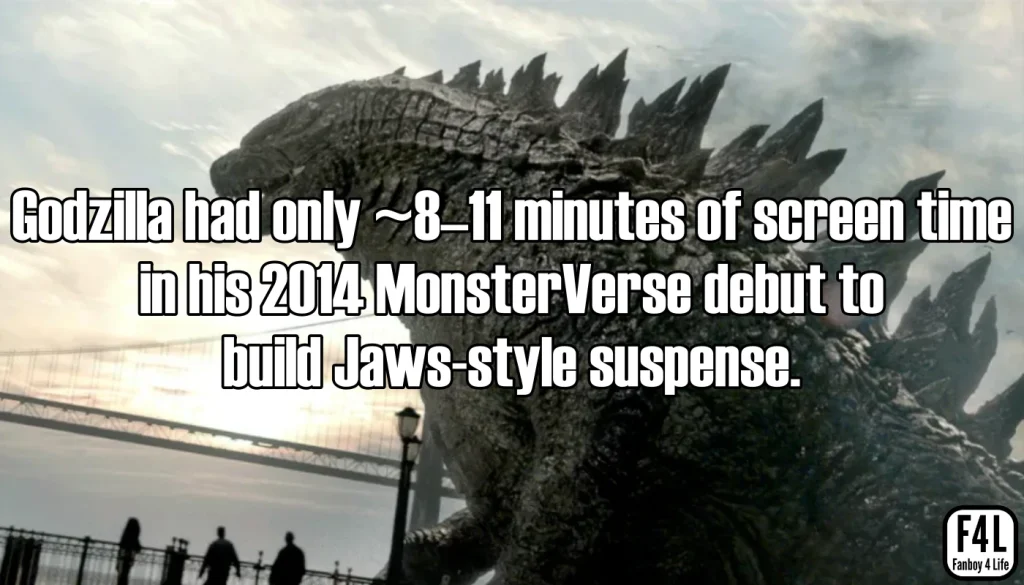
19. He Only Had Around 8–11 Minutes of Screen Time in His 2014 MonsterVerse Debut
When Gareth Edwards rebooted the franchise in 2014 to launch Legendary’s MonsterVerse, audiences were surprised to discover that Godzilla only appeared on screen for roughly 8 to 11 minutes out of the film’s 123-minute runtime. Inspired by Steven Spielberg’s restraint with the shark in Jaws, Edwards deliberately held back full-body shots for the first hour—making Godzilla’s roaring airport reveal in Honolulu and his blue atomic breath blast in San Francisco two of the most electrifying theater moments of the 2010s.
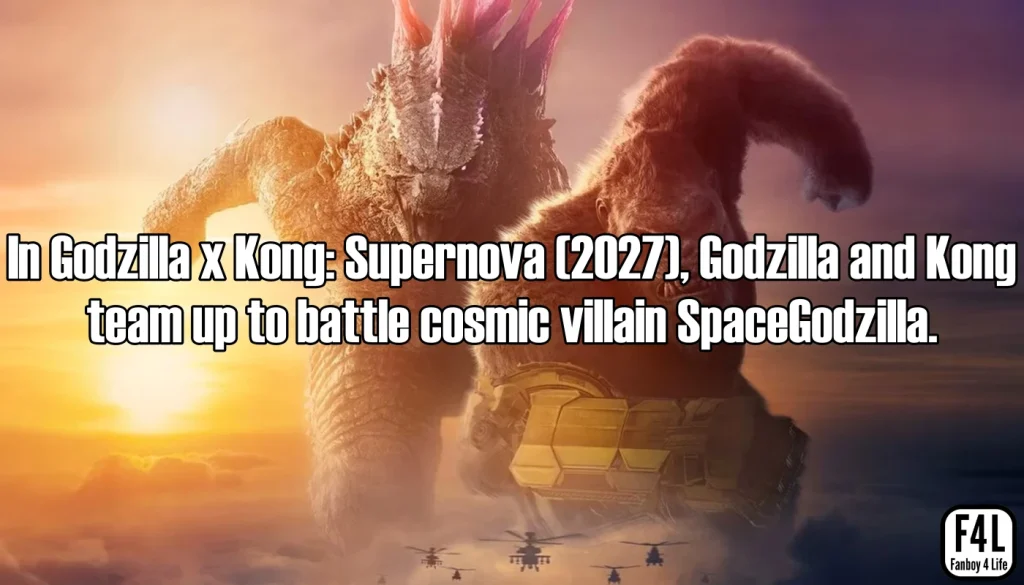
20. He Will Face a Cosmic Threat in Godzilla x Kong: Supernova (2027)
After teaming up to overthrow the Skar King and free the ice Titan Shimo in Godzilla x Kong: The New Empire, Godzilla and Kong reunited in Legendary’s Godzilla x Kong: Supernova (2027). Directed by Grant Sputore and starring Kaitlyn Dever, Dan Stevens, and Sam Neill, the sixth MonsterVerse installment pits Earth’s two Alpha Titans against Toho’s legendary crystalline cosmic villain SpaceGodzilla.