
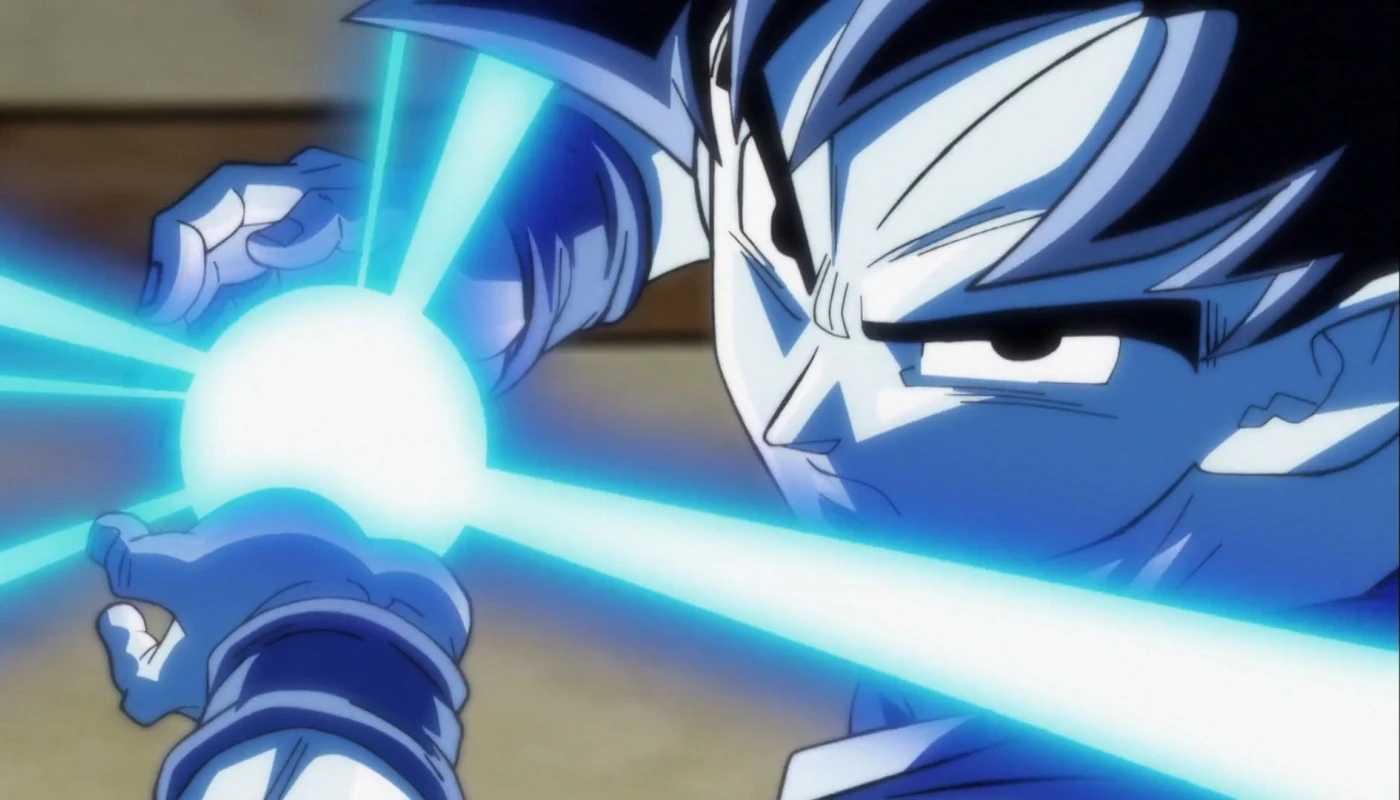
Few characters in fiction have defined global pop culture, animated storytelling, and martial arts philosophy quite like Son Goku. Created by Akira Toriyama and making his debut in Weekly Shōnen Jump in 1984, Goku’s journey from an eccentric, monkey-tailed orphan living in Mount Paozu to Earth’s definitive protector and a wielder of divine Autonomous Ultra Instinct serves as the narrative and emotional foundation of the entire Dragon Ball mythos.
Whether defending Earth from galactic conquerors, breaking physical limits through relentless discipline, or turning former nemeses into steadfast allies, Goku embodies the pure drive for self-improvement. He does not fight out of a desire for glory or political duty, but out of a pure love for the martial arts journey.
This summary breaks down Son Goku’s origin lore, complete timeline continuity (including Dragon Ball DAIMA and Dragon Ball GT), martial arts techniques, official transformation power multipliers, defining rivalries, and landmark historical battles.
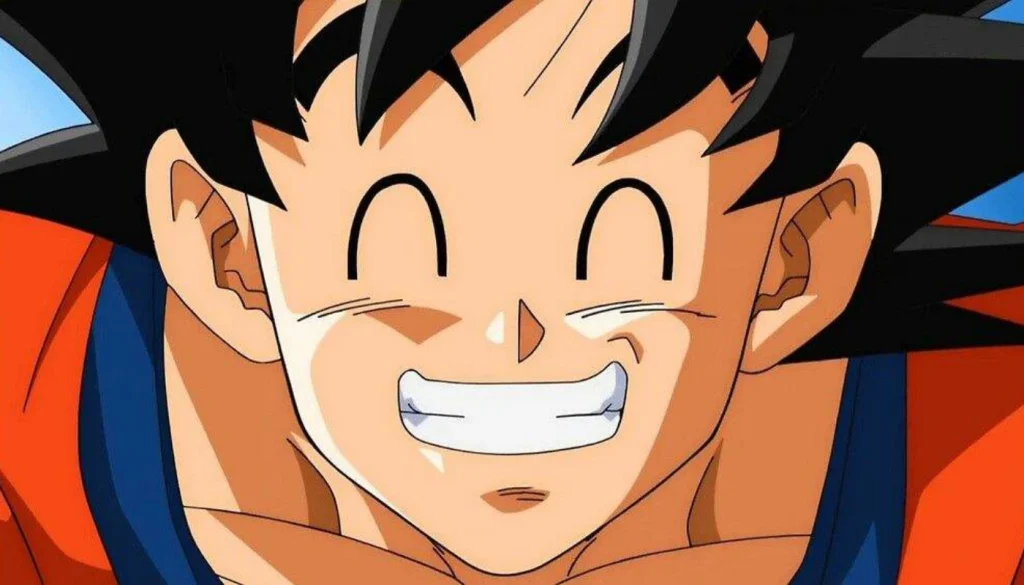
1. Character Origin & Core Narrative Arc
The Fall of Planet Vegeta & Arrival on Earth
Born under the Saiyan name Kakarot on Planet Vegeta, Goku was born into a warrior race that served under the galactic emperor Frieza. Shortly before Frieza decimated Planet Vegeta out of fear of the legendary Super Saiyan prophecy, Goku’s parents—Bardock and Gine—placed the infant in an attack pod bound for Earth.
Discovered in the Mount Paozu wilderness by the martial artist Grandpa Gohan, the baby initially displayed the wild, aggressive tendencies of his Saiyan bloodline. However, a head injury suffered after falling into a deep ravine permanently altered his brain structure. The trauma erased his innate Saiyan bloodlust, leaving behind a gentle, innocent disposition. Gohan raised Kakarot as his grandson, named him Son Goku, and instructed him in foundational martial arts. Tragically, Grandpa Gohan passed away after Goku unknowingly transformed into an Oozaru (Great Ape) under a full moon, leaving Goku to live alone in Mount Paozu with Gohan’s Four-Star Dragon Ball as his sole keepsake.
Goku’s early progression follows a clear path of growth: he began his life on Planet Vegeta before being sent via space pod to Earth, landing in Mount Paozu where he was raised by Grandpa Gohan, eventually leading to his formal martial arts induction under Master Roshi’s Turtle School.
The Search for the Dragon Balls & The Turtle School
Goku’s life altered dramatically upon meeting Bulma, a teenage genius searching for the mystical Dragon Balls. Venturing outside Mount Paozu for the first time, Goku explored a vast world filled with deadly martial artists, demonic kings, and high-tech armies.
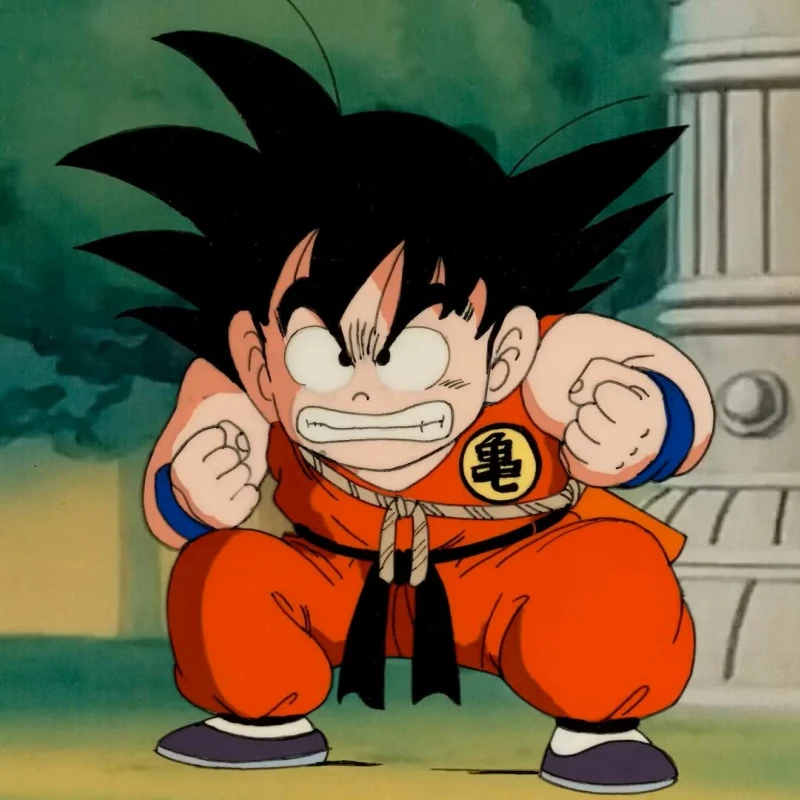
Recognizing the young boy’s immense physical potential, Master Roshi accepted Goku and Krillin as pupils under the Turtle School (Kame-senryu). Roshi’s training regime—combining heavy manual labor, rigorous academic study, adequate rest, and the mindset that there will always be someone stronger—became the lifetime philosophy that drives Goku’s training.
2. Definitive Chronological Timeline
Navigating the Dragon Ball timeline requires establishing a clear order across every major era, including main manga continuity, side stories, and alternate anime expansions.
Timeline Chronology Overview
| Era Order | Series / Saga Title | Timeline Placement | Core Focus & Narrative Scope |
| 1 | Dragon Ball (Classic) | Early Years to Adulthood | Mount Paozu to the 23rd World Martial Arts Tournament; training under Roshi, Korin, and Kami. |
| 2 | Dragon Ball Z (Buu Arc) | Saiyan Saga to Kid Buu Defeat | Unlocking Saiyan heritage, achieving Super Saiyan 1 to 3, and destroying Kid Buu with the Spirit Bomb. |
| 3 | Dragon Ball DAIMA | Directly After Buu / Before DBS | Set in the peaceful gap post-Buu. Goku explores the Demon Realm after being turned into a child. |
| 4 | Dragon Ball Super | God Era to Granolah / Super Hero | Unlocking God Ki under Whis, mastering Ultra Instinct, and taking on multi-universal threats. |
| 5 | Dragon Ball GT | Alternate Future (Non-Canon) | 5 years post-End of Z. Alternate timeline featuring the Black Star Dragon Balls and Super Saiyan 4. |
Era 1: Dragon Ball (Classic)
- Narrative Scope: Spans Goku’s childhood from meeting Bulma through his victory over Piccolo Jr. at the 23rd World Martial Arts Tournament.
- Key Milestones: Dismantling the Red Ribbon Army, defeating King Piccolo, training under Kami and Mr. Popo, mastering sensory awareness, and marrying Chi-Chi.
Era 2: Dragon Ball Z
- Narrative Scope: Begins with Raditz exposing Goku’s alien origins, spanning the Saiyan Saga, Namek/Frieza Saga, Androids/Cell Saga, and Majin Buu Saga.
- Key Milestones: Unlocking Super Saiyan on Planet Namek, sacrificing his life during the Cell Games, mastering Super Saiyan 3 in Other World, and eliminating Kid Buu via the Super Spirit Bomb.
Era 3: Dragon Ball DAIMA (Chronological Placement)
- Narrative Scope: Positioned in the timeframe immediately following Majin Buu’s defeat, occurring prior to the arrival of Beerus in Dragon Ball Super.
- Key Milestones: Goku and his allies are reverted to miniature forms due to a conspiracy engineered by King Gomah of the Demon Realm. Stripped of his adult physical reach, Goku relies on his hand-to-hand fundamentals and the Power Pole (Nyobo), giving fans an intricate look at his raw martial arts talent without heavy divine transformations.
Era 4: Dragon Ball Super
- Narrative Scope: The divine era, beginning with the awakening of Beerus and extending through the Battle of Gods, Resurrection ‘F’, Universe 6 Tournament, Goku Black, Tournament of Power, Broly, Moro, Granolah, and Super Hero sagas.
- Key Milestones: Harnessing God Ki, mastering Super Saiyan Blue, training under the Angel Whis, unlocking Autonomous Ultra Instinct, and pushing past mortal limits against universal combatants like Jiren and Gas.
Era 5: Dragon Ball GT (Alternate Sequel / Non-Canon Expansion)
- Narrative Scope: Takes place five years after the 28th World Martial Arts Tournament (End of Z), presenting an alternate future timeline where Emperor Pilaf accidentally uses the Black Star Dragon Balls to transform Goku back into a child.
- Key Milestones: While excluded from Akira Toriyama’s main manga continuity, GT remains culturally significant for introducing Super Saiyan 4—a transformation that merges the primal Oozaru state with Super Saiyan power—alongside the 10x Kamehameha and the fight against the Shadow Dragons.
3. Transformation Hierarchy & Power Scaling Guide
While fan debates over power scaling run deep, official guidebooks like the Daizenshuu 7 and the Super Exciting Guide established canonical power multipliers for Goku’s early Super Saiyan forms. For divine transformations, numerical multipliers were set aside in favor of shifts in Ki control and godly realm access.
Official & Canonical Multipliers
| Transformation | Official Multiplier | Primary Source | Distinct Characteristics & Mechanics |
| Great Ape (Oozaru) | 10x Base | Manga / Daizenshuu 7 | Requires a tail and 17 million Zeno units of Blutz Waves; causes massive physical growth. |
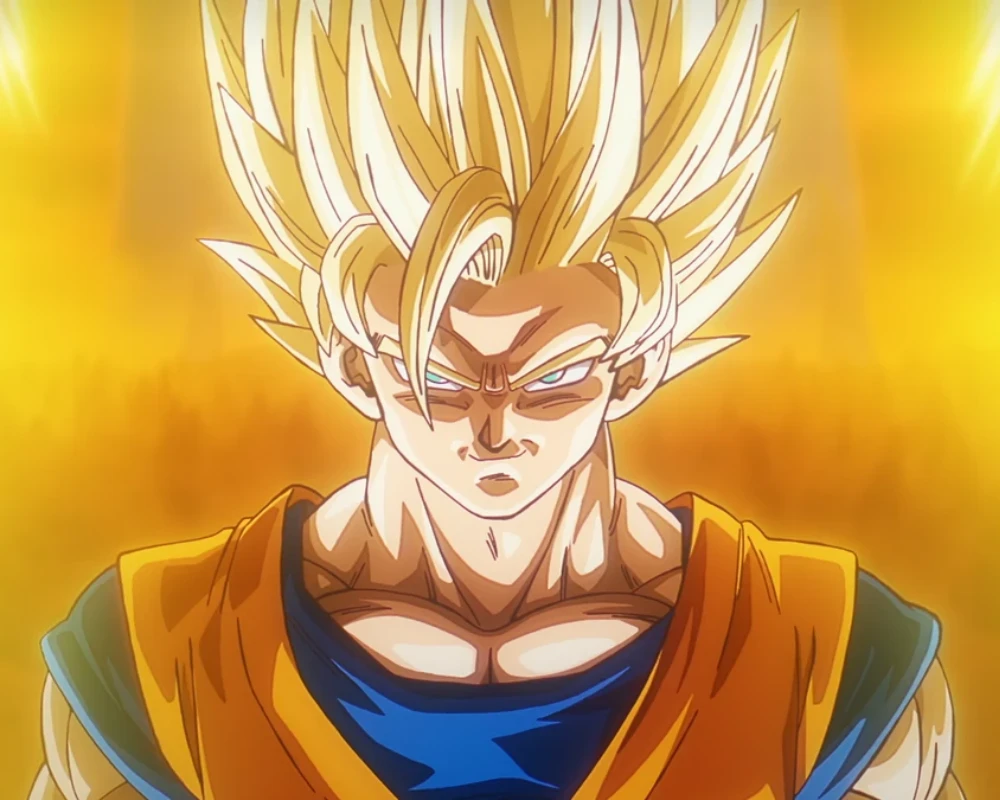
| Super Saiyan (SSJ) | 50x Base | Daizenshuu 7 / Super Exciting Guide | Awakened by emotional rage on Namek; golden aura and spiked yellow hair. |
| Super Saiyan 2 (SSJ2) | 2x SSJ (100x Base) | Super Exciting Guide | Electric bio-lightning in aura; sharper hair profile and increased speed. |
| Super Saiyan 3 (SSJ3) | 4x SSJ2 (400x Base) | Super Exciting Guide | Unlocks full latent physical Ki; causes long hair, lost eyebrows, and heavy stamina drain. |
| Super Saiyan 4 (SSJ4) | Unspecified (Est. 500x+) | Dragon Ball GT Lore | Combines the Golden Great Ape form with conscious control; red fur body and dark hair. |
Note: Divine forms (Super Saiyan God, Super Saiyan Blue, and Ultra Instinct) do not carry official numerical multipliers in canonical databooks. They represent qualitative transitions from mortal Ki to god-level energy management.
Detailed Breakdown of Divine & Mastered Forms
Goku’s transformation pathway is divided into two distinct realms: Mortal Ki Transformations and Divine Godly Forms.
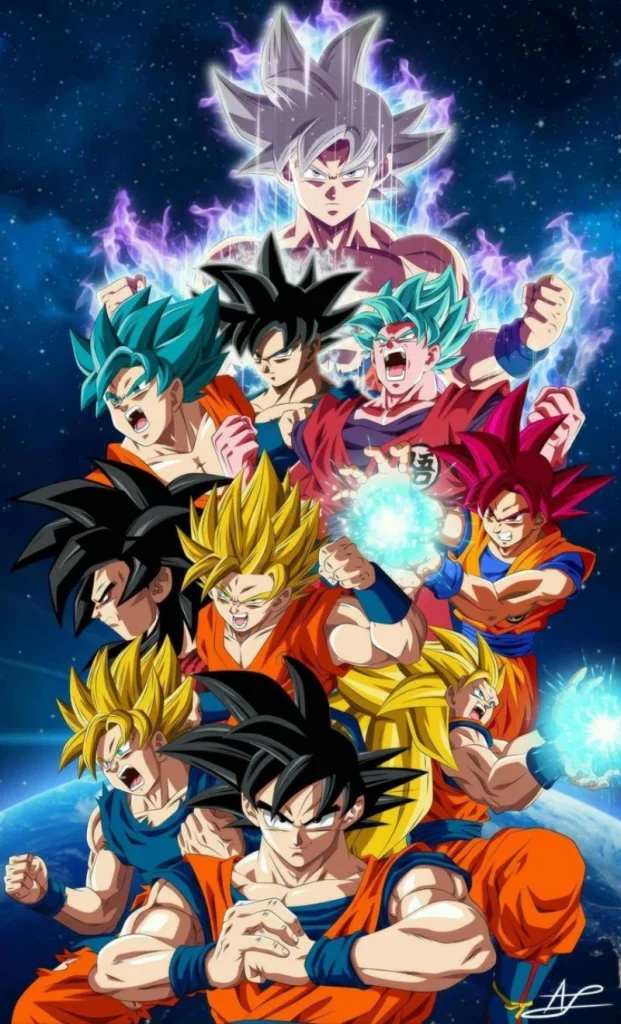
His mortal progression starts from his Base Form (1x multiplier), scaling upward to the Great Ape (10x Base), Super Saiyan (50x Base), Super Saiyan 2 (100x Base), and capping out at Super Saiyan 3 (400x Base).
His divine progression moves past mortal Ki entirely. It begins with Super Saiyan God as the foundation of divine Ki, advances to Super Saiyan Blue (which stacks the 50x Super Saiyan form directly onto Super Saiyan God), transitions into Ultra Instinct Sign (the defensive awakening of god-level reflexes), and culminates in Autonomous Ultra Instinct (complete offensive and defensive mastery).
1. Super Saiyan God (SSG)
- First Appearance: Dragon Ball Z: Battle of Gods / Dragon Ball Super Episode 9
- Mechanics: Unlocked through a ritual involving six pure-hearted Saiyans or through god-ki conditioning under Whis. Grants Goku magenta hair, a slender frame, divine Ki sensing, and rapid physical healing.
2. Super Saiyan Blue (SSGSS)
- First Appearance: Dragon Ball Z: Resurrection ‘F’ / Dragon Ball Super Episode 27
- Mechanics: Formally named Super Saiyan God Super Saiyan, this state applies the 50x Super Saiyan multiplier directly onto the Super Saiyan God base. It demands precision Ki control to prevent energy drain.
3. Ultra Instinct Sign (Migatte no Gokui Kizashi)
- First Appearance: Dragon Ball Super Episode 110 (Tournament of Power)
- Mechanics: A defensive state where Goku’s body reacts automatically to threats without mental calculation. Identified by silver eyes, a blue-silver aura, and intense heat dissipation.
4. Mastered Ultra Instinct (Autonomous Ultra Instinct)
- First Appearance: Dragon Ball Super Episode 129
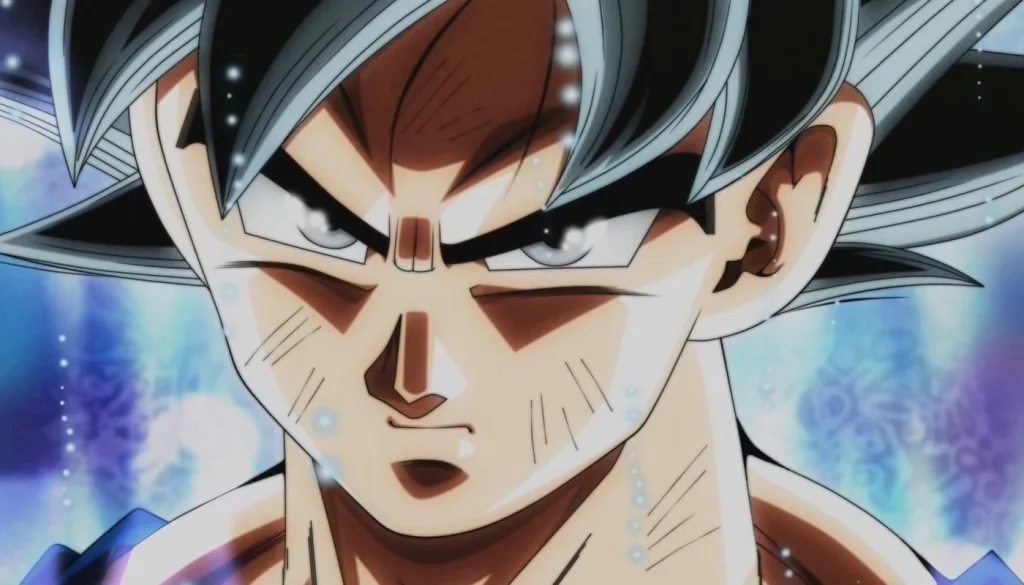
- Mechanics: Full synthesis of offensive and defensive instinct. Goku’s hair turns silver, granting instantaneous counter-attacks and movement that bypasses physical reaction delays.
4. Mastered Martial Arts & Signature Arsenal
Goku’s movepool blends Earth-based martial arts from Master Roshi, alien techniques learned across the cosmos, and divine abilities taught by angels.
Techniques Categorization
| Skill Category | Technique Name | Origin / Master | Combat Function & Characteristics |
| Turtle School | Kamehameha | Master Roshi | Concentrates latent Ki into the palms for a focused beam blast. Variations include Instant and 10x Kamehameha. |
| Other World | Kaioken | King Kai | Multiplies Ki, strength, speed, and senses in short bursts; puts high physical strain on the body. |
| Other World | Spirit Bomb (Genki Dama) | King Kai | Gathers life energy from plants, animals, and living beings into a sphere; only damages evil entities. |
| Yardrat | Instant Transmission | Yardrat Elders | Teleports the user to any familiar Ki signature across planets, dimensions, or the Other World. |
| Divine | God Bind | Whis / God Ki Training | Uses divine Ki to lock an opponent’s body in place, immobilizing them in mid-air. |
| Divine | Hakai (Manga) | Destroyer Lore | A technique Goku adapted in the DBS manga to erase targets by channeling Destruction energy. |
5. Mentors, Master-Student Bonds & Key Rivalries
Goku’s growth is reflected through the mentors who refined his craft and the rivals who challenged his limits.
Goku’s lineage of martial arts instruction represents a continuous ladder of escalation: beginning with Grandpa Gohan on Earth, moving to Master Roshi for foundational conditioning, scaling to Korin for sensory awareness, advancing to Kami and Mr. Popo for spiritual calm, reaching King Kai in the Other World for high-gravity techniques, and finally ascending to Whis for divine Angelic training.
Similarly, his combat foils evolved from early martial arts competitors like Yamcha, Krillin, and Tien Shinhan, to mortal threats like Piccolo and Vegeta, expanding to galactic nemeses like Frieza, and culminating in cosmic wall opponents like Jiren.
Goku’s Mentors & Instructors
- Grandpa Gohan: Taught Goku foundational hand-to-hand combat, tail defense, and basic discipline in Mount Paozu.
- Master Roshi (Turtle Hermit): Taught Goku that physical strength must be paired with mental rest and humility, instilling the mindset that someone stronger will always exist.
- Korin: Taught Goku physical endurance, breathing techniques, and how to read subtle body movements by trying to grab the Sacred Water.
- Kami & Mr. Popo: Refined Goku’s sensory capabilities, teaching him to move quietly, clear his mind, and sense Ki without relying solely on sight.
- King Kai (North Kai): Taught Goku how to handle high gravity (10x Earth), along with the Kaioken and Spirit Bomb techniques.
- Whis (Angel): Introduced Goku to God Ki, taught him precise energy conservation, and guided his path toward Ultra Instinct.
Defining Rivalries & Foils
- Vegeta: The quintessential rival. Vegeta represents Saiyan royal pride, tactical aggression, and relentless strength, contrasting Goku’s lighthearted demeanor and humble background. Their rivalry pushes both to reach new heights.
- Piccolo: Originally Goku’s fierce mortal enemy (Reincarnation of King Piccolo), Piccolo evolved into a trusted comrade and tactician through Goku’s sportsmanship and mutual respect.
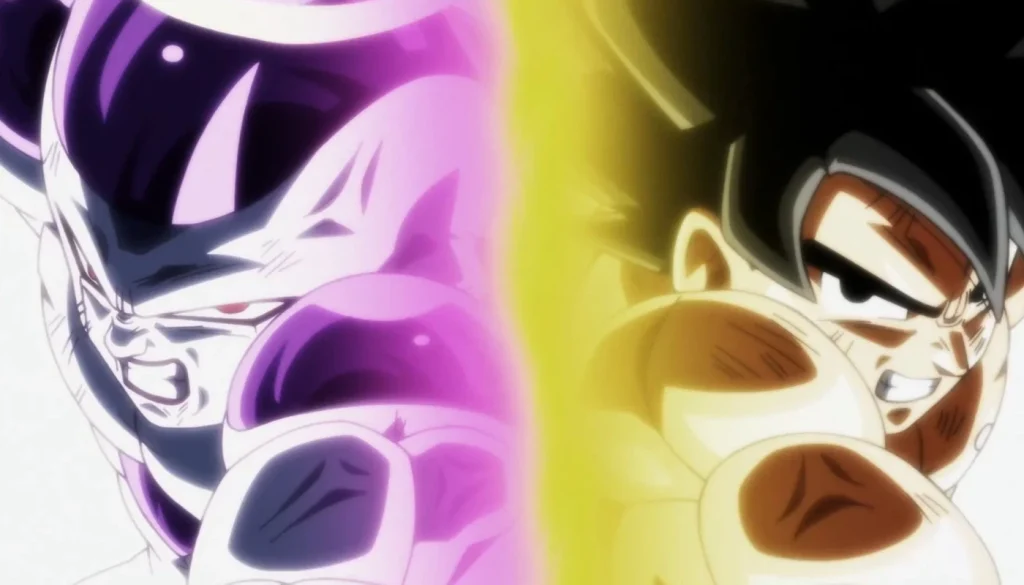
- Frieza: Goku’s primary ideological opposite. Frieza represents cruel tyranny and unearned natural talent, whereas Goku represents mercy, hard work, and self-improvement. Frieza’s actions on Namek triggered the Super Saiyan transformation.
6. Top 5 Defining Battles in Franchise History
1. Goku vs. Jackie Chun (Master Roshi) – 21st World Martial Arts Tournament
- Narrative & Tactical Context: This legendary battle served as Goku’s grand debut on the world martial arts stage. After months of grueling Turtle School conditioning—carrying milk crates, plowing fields with bare hands, and dodging bees—Goku entered the 21st World Martial Arts Tournament eager to test his strength. Unbeknownst to Goku and Krillin, Master Roshi entered the tournament under the pseudonym Jackie Chun. Roshi feared that if his young prodigies won the tournament easily, they would succumb to arrogance and abandon their martial arts practice.
- Key Combat Moments: The fight evolved into an extraordinary display of acrobatic hand-to-hand martial arts, with both fighters matching each other blow for blow. When Roshi executed his lightning technique, Goku was driven to his physical limit. The battle escalated further when Goku caught sight of the full moon and transformed into an Oozaru (Great Ape), threatening to destroy the arena. Demonstrating incredible quick thinking, Roshi fired a maximum-power Kamehameha not at Goku, but at the moon itself, destroying it and restoring Goku to his human form.
- The Conclusion & Impact: The dual exhaustion of both fighters led to a dramatic double-knockout. In the final seconds, Roshi managed to stand first by virtue of his longer physical reach, taking the victory. This fight established the guiding philosophy of the entire franchise: there will always be someone stronger in the world, ensuring that Goku’s drive for self-improvement would never extinguish.
2. Goku vs. Vegeta – The Earth Invasion (Saiyan Saga)
- Narrative & Tactical Context: After learning of his alien Saiyan heritage and sacrificing his life to stop Raditz, Goku trained in the Other World under King Kai. Returning to Earth via the Dragon Balls, Goku arrived just in time to save his surviving allies from the ruthless Prince Vegeta and his giant enforcer Nappa. The battle against Vegeta was an existential struggle for Earth’s survival, pitting a low-class Saiyan warrior who believed in hard work against the high-born royal prodigy who relied on absolute lineage superiority.
- Key Combat Moments: Realizing Vegeta’s base power far exceeded his own, Goku was forced to push his body beyond safe parameters by utilizing the Kaioken. Stacking the technique to Kaioken 3x, Goku overwhelmed Vegeta, sparking a furious aerial exchange. When Vegeta attempted to destroy Earth with his Galick Gun, Goku countered with a Kaioken 4x Kamehameha beam struggle that pushed the Saiyan Prince into the upper atmosphere. Refusing to accept defeat, Vegeta created an artificial moon to transform into a Great Ape, crushing Goku’s bones and forcing Krillin, Gohan, and Yajirobe to intervene to sever Vegeta’s tail.
- The Conclusion & Impact: Though physically crippled, Goku entrusted the remaining energy of his Spirit Bomb to Krillin, who hit Vegeta with Gohan’s assistance. When Krillin moved to execute the defeated Vegeta with Yajirobe’s sword, Goku pleaded for his rival’s life, wishing to test himself against Vegeta again in the future. This iconic mercy decision set the stage for one of anime history’s greatest redemption arcs.
3. Goku vs. Frieza – Planet Namek (Namek Saga)
- Narrative & Tactical Context: Taking place on a dying Planet Namek, this duel represents the emotional apex of the original Saiyan saga. Frieza, the tyrant who destroyed Planet Vegeta and slaughtered millions across the galaxy, sought immortality through the Namekian Dragon Balls. Goku, having recovered from his injuries and endured intensive 100x gravity training en route to Namek, stepped onto the battlefield as the last hope for both the Saiyan race and the Namekian people.
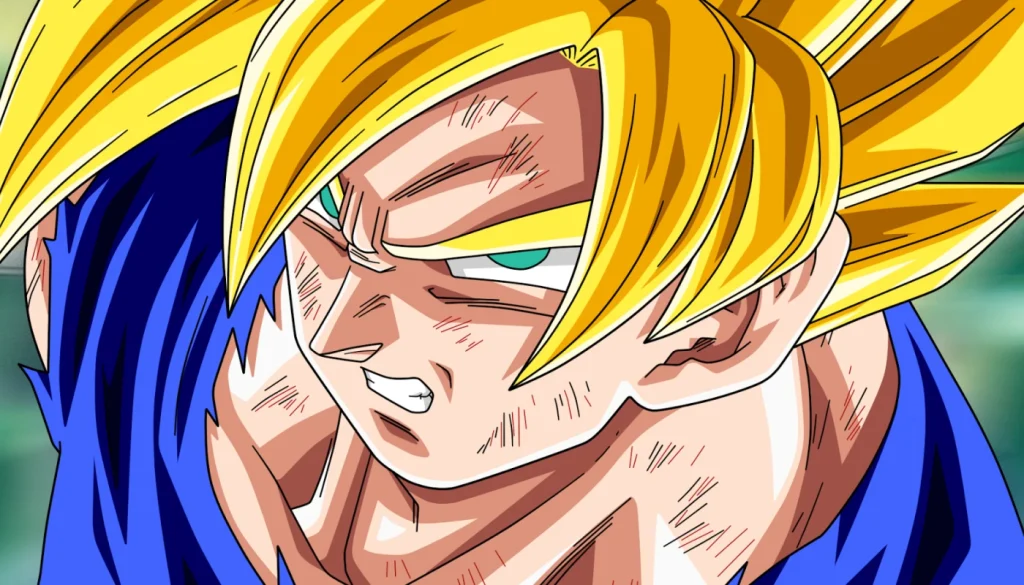
- Key Combat Moments: The battle spanned multiple phases, escalating as Frieza unveiled his 100 percent final form. Even with Kaioken 20x and a massive Super Spirit Bomb constructed from the surrounding solar systems, Goku could not permanently put down the emperor. The turning point occurred when Frieza resurfaced, mortally wounding Piccolo and brutally detonating Krillin. The sheer emotional trauma and rage triggered the legendary Super Saiyan awakening—fulfilling an ancient prophecy. Transformed with golden hair and glowing green eyes, Goku completely dominated Frieza across the crumbling planet.
- The Conclusion & Impact: Recognized as the longest continuous duel in anime history, the fight ended with Frieza inadvertently slicing himself with his own Death Slicers. Despite Frieza’s treachery when granted a small portion of Goku’s Ki to survive, Goku blasted the emperor into the exploding crust of Namek before escaping in a Ginyu Force pod. The victory solidified Super Saiyan as the supreme power benchmark of the era.
4. Goku vs. Cell – The Cell Games (Androids Saga)
- Narrative & Tactical Context: Facing the bio-android Cell, who had absorbed Androids 17 and 18 to achieve his Perfect Form, Goku volunteered to fight first in the tournament dubbed the Cell Games. Having spent a full year inside the Hyperbolic Time Chamber with Gohan, Goku had mastered Full-Power Super Saiyan (Grade 4), allowing him to maintain the form naturally with zero emotional strain or energy leakage.
- Key Combat Moments: The match was a breathtaking display of high-level martial arts technique, featuring rapid teleportation counters, energy barbs, and arena manipulation. Cell utilized techniques from the galaxy’s greatest fighters—including Piccolo’s Special Beam Cannon and Tien’s Tri-Beam—while Goku countered with fluid martial precision. The climax of their duel featured Goku executing the iconic Instant Kamehameha: charging a planet-busting blast in mid-air, teleporting directly in front of Cell at the last split second, and obliterating Cell’s upper torso.
- The Conclusion & Impact: Despite vaporizing Cell’s upper half, Cell’s core survived due to his Namekian regeneration. After a prolonged exchange, Goku did something that shocked the entire arena: he surrendered. Realizing that Cell’s strength was still slightly superior to his own, Goku willingly stepped down and nominated his teenage son, Gohan, to fight. Goku recognized that Gohan possessed a hidden reservoir of anger that surpassed his own power, setting up Gohan’s Super Saiyan 2 awakening.
5. Goku vs. Jiren – Tournament of Power (Universe Survival Saga)
- Narrative & Tactical Context: With the fate of Universe 7 hanging on the outcome of the Tournament of Power, Goku faced Jiren the Gray—an Pride Trooper from Universe 11 whose raw physical strength surpassed even that of his universe’s God of Destruction. Unlike previous foes who relied on malice or dark magic, Jiren was a warrior of absolute solitary strength, presenting an unyielding wall that Goku could not break through standard transformations.
- Key Combat Moments: Even stacking Super Saiyan Blue with Kaioken 20x failed to leave a scratch on Jiren. When Goku’s own Spirit Bomb was pushed back onto him, the collapse of the energy sphere acted as a catalyst, forcing Goku to break his internal shell and tap into Ultra Instinct Sign. In this state, Goku dodged Jiren’s light-speed attacks effortlessly, though he lacked offensive force. During their final clash, Goku reconciled his body’s defensive reactions with offensive energy, fully awakening Autonomous Ultra Instinct with silver hair and an aura of divine light.
- The Conclusion & Impact: In his completed Ultra Instinct form, Goku completely overwhelmed Jiren, demonstrating that strength forged through trust and bonds overcomes isolated raw power. Although the physical backlash of divine Ki struck Goku near the end of the bout, forcing him to team up with Android 17 and a revived Frieza to eliminate Jiren together, this battle established Autonomous Ultra Instinct as Goku’s ultimate combat horizon.
6. Family & Saiyan Lineage
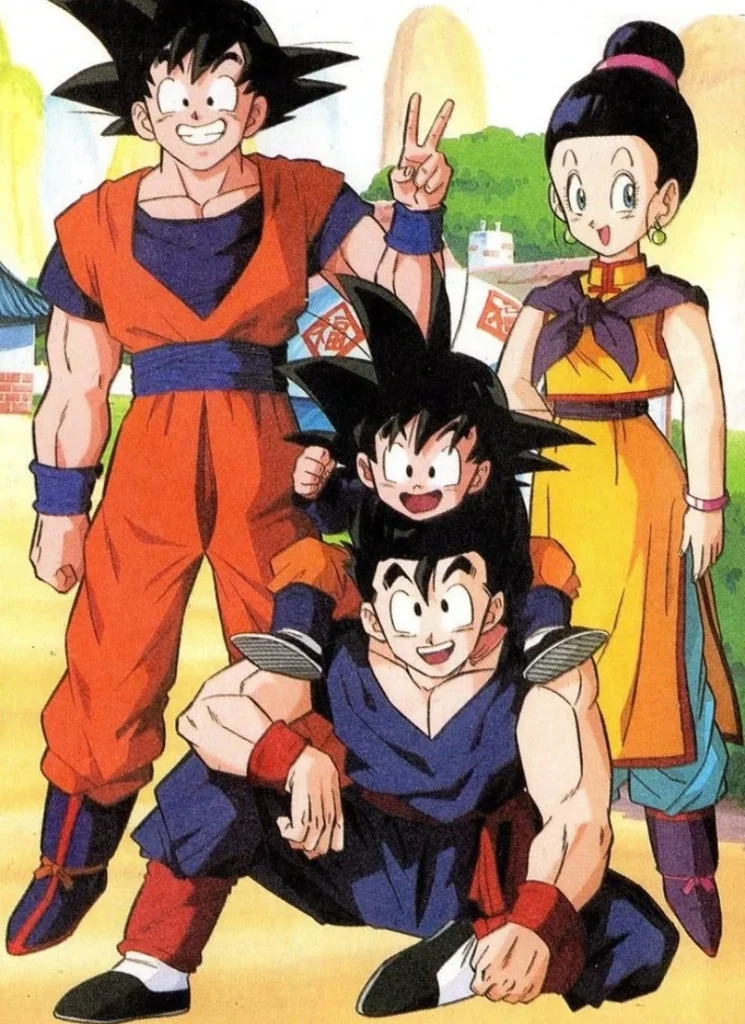
While Goku’s primary identity revolves around his martial arts journey, his family connections—both biological and martial—play a pivotal role in shaping the grand narrative of Dragon Ball. From his ruthless Saiyan bloodline on Planet Vegeta to the peaceful household he established on Earth, Goku’s family dynamics showcase the ultimate contrast between innate alien nature and Earthling nurture.
1. Raditz – The Biological Brother & Catalyst of DBZ
- Relation: Older Brother (Biological Son of Bardock and Gine)
- Narrative Impact: Raditz’s arrival at the beginning of Dragon Ball Z stands as one of the most explosive narrative turning points in manga history. Arriving on Earth in a Saiyan pod, Raditz shattered Goku’s understanding of his identity by revealing that Goku was not an Earthling, but a low-class Saiyan warrior named Kakarot sent to purge the planet.
- The Conflict & Legacy: Disgusted by Goku’s soft nature and lack of bloodlust, Raditz kidnapped young Gohan to force Goku back into his Saiyan roots. This compelled Goku to forge a desperate, unheard-of alliance with his mortal enemy, Piccolo. Ultimately, Goku sacrificed his own life—holding Raditz in a Nelson hold while Piccolo blasted them both with the Special Beam Cannon (Makankosappo). Though Raditz died early in the saga, his brief appearance permanently opened the door to extraterrestrial lore, the Frieza Force, and the arrival of Vegeta and Nappa.
2. Bardock & Gine – The Biological Parents
- Relation: Father and Mother
- Narrative Impact: Bardock was a low-class Saiyan warrior who led a crew on conquer missions under Frieza’s command. Upon realizing Frieza intended to genocide the Saiyan race, Bardock and his mate Gine placed infant Kakarot into an escape pod bound for Earth in a rare act of parental affection. Bardock died fighting Frieza in space, while his legacy as a rebellious warrior inspired future lore adaptations (including The Father of Goku special and Dragon Ball Super: Broly).
3. Chi-Chi – Wife & Anchor to Normalcy
- Relation: Wife
- Narrative Impact: The daughter of the Ox-King, Chi-Chi first met Goku during their childhood and secured a naive promise of marriage from him (which Goku famously misconstrued as a type of food). They officially married after the 23rd World Martial Arts Tournament. Chi-Chi serves as Goku’s vital link to everyday Earth life, constantly balancing Goku’s wild training habits with her fierce determination to raise their sons with academic discipline and social respectability.
4. Son Gohan & Son Goten – The Half-Saiyan Sons
- Relation: Eldest Son (Gohan) and Younger Son (Goten)
- Narrative Impact:
- Son Gohan: Named after Goku’s adoptive grandfather, Gohan inherited an unmatched reservoir of latent hybrid power. Goku recognized that Gohan’s emotional fury could surpass his own, leading to Gohan unlocking Super Saiyan 2 and defeating Cell. Unlike his father, Gohan chose a scholar’s life, though he steps up to defend Earth when duty calls (unlocking Ultimate Gohan and Beast Gohan).
- Son Goten: Born during the seven-year gap following Goku’s death at the Cell Games, Goten shares a near-identical physical appearance to young Goku. Possessing natural martial prodigy traits, he unlocked Super Saiyan at a remarkably young age without emotional trauma and frequently merges with Trunks via the Fusion Dance to form Gotenks.
5. Pan & The Future Generations
- Relation: Granddaughter (Daughter of Gohan and Videl)
- Narrative Impact: Pan represents the continuation of the Son family legacy into the quarter-Saiyan generation. Showing exceptional flying and combat capability as early as infancy in Dragon Ball Super and Super Hero (and acting as a central protagonist in Dragon Ball GT), Pan proves that the martial arts spirit of Goku lives on down the family tree.
7. Psychological & Narrative Analysis: Why Goku Endures
Goku’s enduring popularity is rooted in a three-part narrative framework: prioritizing Self-Mastery Over Conquest, approaching Combat as Dialogue, and using Forgiveness as an Opportunity to push both himself and his opponents to new limits.
When evaluated alongside other heroic figures like Superman, Monkey D. Luffy, or Naruto Uzumaki, Son Goku occupies a distinct place in character design:
- Motivation: Goku isn’t driven by a desire for recognition (like Naruto) or absolute justice (like Superman). His goal is self-mastery. He views combat as a way to test his limits against skilled opponents.
- Combat as Dialogue: Goku views fighting as a universal language. Through combat, he understands his opponent’s heart, which allows him to earn the respect of past enemies like Tien, Piccolo, Vegeta, and Broly.
- Forgiveness & Redemption: Goku’s willingness to grant mercy to fallen foes doesn’t stem from moral judgment, but from a hope to fight them again when they are stronger. This mindset has repeatedly transformed dangerous villains into Earth’s strongest protectors.
8. Summary & Character Legacy
Son Goku stands as the ultimate symbol of boundless optimism, unyielding discipline, and the pursuit of self-improvement. From his humble origins as a monkey-tailed orphan in Mount Paozu to achieving divine mastery among the gods, Goku’s journey demonstrates that limits exist only to be broken. He is not defined by inherited privilege, political duty, or a rigid heroic complex, but by a pure, lifelong love for the martial arts path.
His unique ability to transform mortal enemies into lifelong comrades, coupled with his willingness to constantly push past his own ceiling, has cemented his place as one of the most iconic protagonists in modern fiction. Whether navigating the high-stakes battles of Dragon Ball Z, discovering new frontiers in Dragon Ball Super, or embracing foundational combat roots in Dragon Ball DAIMA, Goku’s legacy remains timeless: there will always be someone stronger, and the journey to self-mastery never truly ends.
9. References
To explore canonical data, episode guides, and official character bios, reference the following resources:
- Dragon Ball Official Site – Official Dragon Ball Portal
- Dragon Ball Fandom Wiki – Son Goku Character Profile
- Kanzenshuu – Daizenshuu 7 & Databook Battle Power Guides
- Goku Wiki – Goku Wiki
- Goku Facts – Goku Facts


